Sunday, August 14, 2016

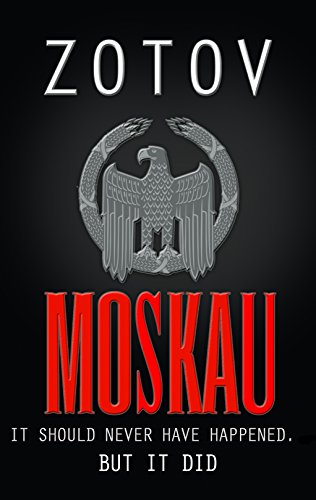
Moskau - for Alternative History genre readers

Part One

The King of Dwarves


Valhalla, the Gods await me,
Open wide Thy gates, embrace me,
Great hall of the battle slain
With swords in hand!

Manowar, Gates of Valhalla 


Prologue


“You don’t think all those things really exist, surely?”
She smiles — not a grin but a small smile, just baring her little white teeth as if she's about to sink them into you. Her eyes glisten; her fingers clench the stem of her wine glass. Women love to argue. Not because they want to get to the truth but out of cheer stubbornness: they hate to admit defeat. I bet she feels aroused at moments like these.
I take a theatrical pause, pretending her question has caught me unprepared. The black curtain embossed with a runic pattern quivers in the little current of air from the aircon. The silence is absolute. The closed windows don’t let through the groaning of cars stuck in the traffic jams. The candles flicker like wolves’ eyes in the dimmed light.
You might mistake my room for a hunter’s abode. Wherever you look, its walls are lined with the twisted horns of wild ox and deer skulls bleached with time. The dinner table rests on a bear hide of a deliberately crude tanning. A boulder I brought from the Norwegian marshes sits at the center of the room. It’s a gorgeous item: a monolith chunk of granite.
“Absolutely,” I reply calmly. “I don't doubt it for one single moment.”
She sips red wine from her glass. Her cheeks begin to glow. She’s about to launch an offensive.
“Very well... I agree, to a point,” she says. “Let’s presume that our planet was formed in place of the primordial chasm of Ginnungagap that used to divide the two realms of ice and fire. For millennia the two kingdoms drifted toward each other until they finally united, producing the athletic giant Ymir and Audumbla the cow. Personally, I tend not to agree with what was supposed to happen next but... I might just suspend my disbelief that much. The first man and woman emerged from Ymir's sweat while his two legs copulated with each other, giving birth to a son, which was how the ice giants were born into the Earth’s stormy night. I’m not laughing at you, oh no. If our historians still argue over the intricacies of the Great Battle, who would take it upon themselves to claim the knowledge of what happened a million years ago? How did humanity come about? Did it emerge from the ocean, drop from the sky or crawl out of underground tunnels? All this is guesswork.”
She sets her glass down. Flirtatiously she rearranges a feathery strand of hair. “But as for the rest... you’ll excuse me if I interrogate you extensively,” she continues. “Let’s examine it all in every detail. So, high in the sky we have the hovering Asgard, the heavenly dwelling of the gods, which is perfectly normal. All cultures place their gods up high. The Christians billet their God among the clouds; the Greek gods used to dwell on top of Mount Olympus, and the Hinduist God Shani actually impersonates the planet of Saturn, or all places. Deities are obliged to live in cloudland: if they dwelled amongst us, they'd lose their wits within a week. Now let’s make an effort and imagine one of Asgard’s buildings — namely, Valhalla. Odin’s banquet hall, a place of unending orgies of bingeing and lovemaking. There, dead soldiers gorge nightly on the meat of Sæhrímnir the boar and drink themselves senseless on the mead produced by the udder of Heiðrún the goat. And once they’ve eaten, the dead enjoy the services of beautiful maidens. Five hundred and forty doors — and a roof thatched with gold shields supported by a colonnade of spears. You have to agree that an unwashed medieval Viking warrior must have taken this idea of heaven quite for granted in the wilds of their fiords. But what about us? Us, living in our cynical age of e-funks and the world wide Shogunet network? Us who can’t watch television without our 3D goggles? We can’t even shift our backsides without being assisted by a machine! The office rat responsible for the invention of remote controls must have made a fortune! Do you still think that the Vikings’ heaven is any good for the men of today? Well, I don’t. You, just you personally — do you believe in Valhalla?”
I reach for a slice of pork and chew on it, slowly and neatly. The wheat beer in a misted glass cheers my eye; I watch it weep. I don’t drink wine. I don’t consider it patriotic. She? Well, she... she can do whatever she wants. It’s all peanuts compared to what she’s already done.
“I’d rather believe in Valhalla than in the Biblical heaven,” I answer in a syrupy voice just when she’s about to lose her patience. “It’s much better organized. Every person in the Reichskommissariat, from babies to old women, has a military rank. This is perfectly logical, considering that only an Einherjar can enter Valhalla: a warrior who has died in combat, sword still in hand. Admittedly these rules can sometime have the most funny consequences. Even bus conductors are considered a military unit and have their own system of ranks. A bakery manager receives the rank of a Subaltern Baked of Products and wears special black collar insignia shaped as ears of wheat. Even gynecologists have been made into a Sonderkommando unit complete with a coat of arms depicting a naked Valkyrie revealing her heart in her hands.”
“This is something I could never understand,” she interrupts me. “Why heart?”
“What else should she reveal?” I reply meekly.
She turns red, pretending to play with her wine.
“Everyone wants to go to heaven. This is a prerequisite for our existence,” I press the napkin to my lips. “Behave, and you’ll be rewarded. Valhalla makes it so much simpler. No need to fast and pray. All you need to do is kill and die in battle. This isn’t just what the Vikings think. Muslims believe this too. Or are you uncomfortable about Heiðrún the goat? She doesn’t need to be there after all. I’m quite prepared to allow the existence of a modified version of Valhalla. In this day and age it can be refurbished and turned into anything. Even a sushi bar.”
She empties her glass in one gulp. The twinkle in her eyes expires. “In any case, the Führer isn’t in Valhalla!” she enunciates. “If he's anywhere, then he’s in hell!”
Unhurriedly I dunk the meat into sweet mustard and drag it around my plate. “Our whole life is hell,” I explain with a polite smile. “And the only way to escape it is by dying. If our priests are to be believed, the Führer is busy enjoying Sæhrímnir steaks even as we speak. I know, I know. He didn’t die sword in hand. But what difference does it make? At the moment, the Führer is a trademark, not the nation’s leader. His pictures on mobile phones, lighters and condoms — all this is a marketing ploy. No one’s going to sacrifice their lives for him these days. They might do so if the price is right, provided it’s in yen. Or even Reichsmarks. Alas! All these office rats are unlikely to ever see Valhalla.”
I give the wurstsalat its due: the good old combination of sausages, potatoes and a dash of mayonnaise. I increasingly get the impression that there’s something perverse about our dinner — indecent even. Still I like it. And so, I believe, does she. The Führer? It’s not so simple, either. Even the wisest of our priests admit it, those who were interned in Norwegian caves. The Führer died on October 20 1942 during a parade at the Nibelung Square celebrating the first anniversary of his armies’ victorious entry into the capital of Russland. A lone terrorist driving a truckful of explosives smashed it into the stands by the walls of the Kremlin. Instead of a sword, the Führer was holding a small stack of paper as he delivered one of his fiery speeches. Within a split second, the entire upper echelon of the Third Reich disintegrated in the blast. There wasn’t as much as a single molecule left of them. The Führer took a fast train to Valhalla in the company of Himmler, Bormann, Muller, Goebbels and Goering. I remember a little blond guy in the Higher Theological College ask simple-heartedly, “Do office workers like Reichsleiter Bormann go to Valhalla too?” They kicked the kid out of school on the spot. From what I heard, he became a street sausage vendor.
“Had I not believed in Valhalla, I’d have never become Odin's priest,” I continue, looking her in the eye. “Spirituality is unpopular there days. It’s easier to put the Führer’s portraits on lighters — Japanese tourists buy them like they’re going out of style. Or get a job at the Institute for the Research of Aryan Origins, that’s something quite popular with girls your age. You spend five years as a hermit at the Mount Kailash archeological digs in Tibet searching for the first Aryan sites. Barley cakes, yak butter tea and tons of enlightment. But personally, I wholeheartedly believe in Viking rituals — and not just because they make part of the Reich’s official religion. Go see Trondheim, it’s no less impressive than Jerusalem. The goat is nothing, after all. Not when you think of all Christianity’s goofs.”
She doesn’t say anything. She doesn’t even look my way. She must have taken offence. How are you supposed to talk about anything with the Schwarzkopfs? They're not open to discussion. The moment you say something that contradicts their point of view, they sulk and pout their lips.
The girl reaches for the remote she’s so passionately condemned just a moment ago and thoughtlessly clicks the TV on.
A commercial break. Whenever you switch it on, it’s always advertisements.
Konnichiwa! Want to be sure you’re part of the master race?” a juicy kimono-clad blonde inquires from the screen. “Our Sony computers know if you’re an Aryan. They require a DNA sample to boot up. Our Sakura Operating System is now available in Russisch.”
Unfortunately, the only two things the Reich is good at making are sausages and missiles. All the rest is made in Japan. White goods, brown goods, fountain pens even. The Nippon koku is so popular that every Fräulein[i] worth her salt has had an eyelid job to give her gaze an Asian slant. Japanese food is everywhere. You get served wasabi even with your beer and sausages. Outdoor advertising has more fancy Japanese characters than normal Gothic letters. Slowly and smoothly, the Reich is being devoured by the Teikoku — the Empire. I wouldn’t be surprised if one day we began addressing the Führer as the Mikado!
I sense it’s time to break the silence. “You need some rest. Allow me to accompany you.”
She lays the napkin on the table.
We head for the bedroom. A black color scheme. The wallpaper pattern is that of crossed battleaxes. The interior designer sought inspiration in Viking caves. Well, admittedly he succeeded. I can even sense a whiff of dampness in the air — but most likely, I have the aircon to thank for that. The girl doesn’t like it here, I know. The Schwarzkopfs don’t appreciate living in style. Well, I’m sorry. She has no choice.
I tactfully turn away from the king-size bed while she removes her dress and dons pajamas. I’m sure she wants me to turn round; but I can control myself.
“Good night,” she whispers listlessly and slides under the quilt.
“Sleep tight,” I say as I cuff her wrist to the headrest.
She doesn’t react. Her eyelashes are lowered.
“You need to understand,” I heave a sad sigh. “This is for your own good.”
Quietly I close the door, lock it and place the key in my pocket. A camera eye glows in the room. I may not be there but I can see everything my prisoner is up to. I’m not talking about masturbation. Whenever this happens, I switch off the monitor — you can’t even imagine what a woman can do with only one free hand — and listen to her groans in the speakers. Sometimes I get the impression that she does it not so much for her own pleasure but in order to seduce me. Which woman would refuse to spend a night with a priest — even a pagan priest? At first, when her two shoulder wounds were still raw, the girl tried to free herself but only managed to scrape her handcuffed wrist. Now she’s okay but still I shouldn’t be too lax. She’s wrapped herself in the quilt — asleep, hopefully.
Excellent. I have terrible vertigo.
It takes me a quarter of an hour to heat up the Norse boulder with red-hot embers. It’s so hot I feel like a kitchen cook. I reach for the knife. Its steel is cool against my skin. I ran it across the flat of my hand. Blood drips onto the granite, sizzling and bubbling, streaking the runes brown. My nostrils quiver, taking in the pungent smell of a slaughterhouse.
Pain enters my head. My skin prickles with electric discharges. My eyes fill with white flashes. I can see something but I can’t quite make out what it is. Just some spine-chilling outlines.
It’s all right. I have these fits sometimes. It’ll be over in a couple of minutes.


 Chapter One


The airspace of Russland, near the city of Sochi


Pavel didn’t know what to do with himself. The old Junkers airliner on a LuftStern flight from Hong Kong to Moskau was packed solid and shuddered in the air like a streetcar. The threadbare economy class seats; the stomach-wrenching stench of microwaved meals; the air hostesses with martyr’s smiles on their faces, their unyielding legs swollen from long hours of flight... he’d seen it all on his business trips.
He leafed through a magazine, then listened to the music in his earphones. Doing nothing for ten hours on end could be really exhausting. He couldn’t sleep: the seat was too hard and uncomfortable.
Come to think of it, this time he was really unlucky with his seat.
He’d got to sit in the middle. The window seat (to his left) and the one by the aisle (to his right) were taken by two elderly Japanese. An old man and an old lady. Both wearing those panama hats so beloved by Japanese tourists worldwide, floral-pattern shirts and matching pants. For some reason, they reminded him of two lapdogs, useless and goofy. Plus the cameras, of course. They had even taken a picture of themselves in the plane's bathroom.
The old boy absent-mindedly opened a colorful leaflet and peered at its title through his glasses,

Visit Lake Baikal, gem of the Reich!

Tourism operations to Moskau had shrunk 50% over the last couple of years, and so had the reichsmark in comparison to the yen. Japanese tourists were the only hope the Kommissariat had left. Where else was it supposed to get the money from? Industry was on its last legs. St. Petersburg (or should we call it Peterstadt now?) was flooded every summer with groups from the Nippon koku, complete with their panama hats. Tourist guides were run off their feet taking them from Salvador Dali’s statue of the Führer all the way to Peterhof and street markets offering swastika-decorated Easter eggs. No one really cared that Operation Barbarossa of July 22 1940 had initially intended to raze St. Petersburg to the ground. There had even been some sort of blueprint detailing the whole procedure. Never mind St. Petersburg! The same Operation Barbarossa had planned to flood Moscow and turn it into a water reserve. They’d had some sick imagination, really. No one would admit this but in fact it felt like half the Führer’s entourage had been high on LSD.
The Japanese guy turned the page to the next picture. Palm trees and seaside. A girl in a swimsuit stood on a sandy beach, cocktail in hand.
He turned to Pavel."Sumimasen," he grinned, baring a mouthful of teeth. “Excuse me. Do you speak Russisch?"
At any other time Pavel might have pretended not to understand the question. Still, the flight to Moskau was going to be a long one. What difference would it make anyway, if you were stuck in a confined space at thirty thousand feet with two old farts for company? Even they were a Godsend to while away the time.
He smiled. “Konnichiwa, Sensei. How can I help you?”
The old boy pointed at the girl on the picture, burying his fingernail in her ample chest. “Excuse me,” he said, butchering the language. “My wife and I will be staying two days in Moscow. And after that we’d like to go to the seaside. I can’t decide on a destination. Is the city of Sochi (he pronounced it as Soci) good?”
The plane hit a turbulent patch. The passengers clenched their armrests. Soci! Pavel chuckled to himself. This guy knows what he wants. Very well, then...
He pressed an armrest button. His seat slid backwards.
“If the truth were known, Sochi isn’t a place I’d recommend,” he said with a deadpan face, glancing at the old man. “It’s part of the Caucasus Reichskommissariat. That area suffered a lot during the Twenty-Year War. Service is rubbish. Hotels are refurbished barracks. The sea is still full of drifting mines. Kidnappings of tourists are not uncommon. The local tribesmen often leave their mountains to ambush tourist buses and blow up funiculars. And food is too expensive for what it is. Even corn ears sold by beach vendors — former members of SS Turkic legions — might cost you a good hundred reichsmarks apiece.”
The old man nodded. Apparently, he hadn’t understood half of it. Still, Pavel wasn’t going to switch to German. From his experience, few of the Nippon koku’s denizens knew any Hochdeutsch.
He cast a sideways glance at the booklet. The blue sea, the palm trees, the cocktail glasses and the girl, laughing out loud, in her Peenemünde swimsuit. This was a paste-up if ever he’d seen one.

...Once again, the stench of burning filled his nostrils. Pavel saw the dead cities; the black skeletons of the buildings. The smoke drifted low over rivers overflowing with dead bodies. Oh, yes. He still remembered it all.
By the summer 1984, when the Reich’s flags were finally flying over the Urals’ defenses as well as both African and South American jungles, the ruling elite of Greater Germany had split. Nobody wanted to acquiesce. The SS wanted to have control over the oil wells, the Wehrmacht wanted to lay its hands on the diamond fields while the Gestapo claimed the U-mines. That would have made any history scholar laugh. Money and luxury: this was every empire’s undoing. The hordes of Genghis Khan had crossed the continent from the Chinese steppes to the spires of Polish churches, but the Mongols’ imperium had crumbled to nothing. When a warrior is loaded with gold like a donkey, why would he go into battle? All he can dream of is wine and female affections. Similarly, the Reich’s military elite had mutated, becoming a financial oligarchy. All of them had joined in the carving up of world resources, even the Navy’s Chief Karl Dönitz in his wheelchair, shaking with old age. It was a miracle that the Twenty-Year War hadn’t ended in nuclear attacks: the Reich had tested its first A-bomb already in 1944 on the island of Peenemünde. Unfortunately, the air raids had seriously damaged the nuclear power stations. The air there was still buzzing with radiation and Geiger counters were just as commonplace as aircons.
The old guy just wouldn’t give it a rest. “I wonder if fishing is good in Soci?”
Pavel didn’t hear him. The roaring of the plane’s turbines had nothing to do with it. He was far away, reminiscing.
The Twenty-Year War had flattened each and every one of the Reichskommissariats: East, Ukraine, Caucasus and Turkestan. Some cities had been luckier than others, emerging relatively unscathed. But Moskau, Kiev and Minsk had turned into battlegrounds. The Reich was devouring itself from the inside while the Nippon koku was getting richer, offering loans to both sides. And what was the result? The empire’s economy was on its last legs. Moskau alone was still braving it out while in the Caucasus, from what he’d heard, local highlanders were swapping lynx pelts for butter. Japan, however, had ballooned like bread dough, its skyscrapers bayoneting the sky, their walls covered in neon signs. Not just in Tokyo but also in Shanghai, Manila and Sydney. The post-war accord had granted Japan half the world. They’d received China and Australia, clipped off Alaska, Seattle and Nevada, and invaded Russland’s Far East and Siberia. Oil, gold and gas — the Japs had jumped at their chance then and they had it all now. In 1970s, the Emperor Hirohito had issued a decree gifting Lake Baikal to the Reich. Moskau girls had wrapped themselves in kimonos; all you could see on TV was manga and anime. This was the real enslavement of the planet, creepy and inconspicuous — no need for tanks or airplanes, only fashion statements. Now the Nippon koku was brimming with money while the only thing the Reich still produced was weapons.
But who were they supposed to sell them to if the world was already conquered?
“Fishing?” Pavel resurfaced from his musings. “Plenty of fish there, Sensei. The lake’s seething with them. Take my advice: forget the fishing rod. A machine gun is the thing. Did you watch TV last week? About that mutant shark that attacked a speedboat near Adler, just next to Sochi? Lots of victims that day. And the killer crabs... too much radiation, you see.”
The two tourists’ panama hats rustled as they exchanged anxious whispers. The fact that they had to lean over him to do so didn’t seem to bother them. They hadn’t even thought of asking him to swap places. He watched their wrinkled faces: they looked like two Shar-Pei dogs sniffing each other. Oh, well. They were the master race. As simple as that.
Arigato gozaimasu,” the old man finally managed. “Thank you very much for your help, Sir.”
His wife nodded enthusiastically. It didn’t look as if she’d understood what the conversation had been about. She sneezed and reached into her handbag — apparently, to get a handkerchief. She rummaged through it, rattling its contents, but never produced anything. Her husband exploded in a bout of dry coughing and pressed a hand to his mouth.
Old age ailments! Now they would start taking pills by the handful. Time to bid his Auf Wiedersehen.
“You’re very welcome,” he sighed. “Excuse me, may I squeeze past?”
He walked down the aisle. It felt like being stuck inside a giant bee: a buzzing in your head, a stuffed feeling in your ears. The economy class bathroom was as comfortable as a coffin. He'd have liked to know how porn actors managed to make out in places like these. It was too small for two guinea pigs to fornicate.
The tap produced a weak trickle of hot water. Pavel splashed some onto his face puffy from lack of sleep. He glanced into the mirror and cringed. Not the best version of him. On the other hand, how are you supposed to look like when you live, eat and sleep your job while the top office is too stingy to afford a business class seat for their expert? Sunken cheeks, receding temples, a hooked hawk nose and eyes transparent like jelly. Pavel still remembered what he used to look like while a little kid. He'd never been beauty pageant material, and as for his height... never mind. The Führer had made short men popular. All things considered, not too bad.
Pavel reached into his pocket for a disposable razor and gave himself a good shave.
When he returned to his place, the plane was descending. A viscous lump of nausea blocked his throat. The Japanese’s seats were empty. They were off on some business of their own.
“Ladies and gentlemen, please fasten your seatbelts,” the metallic voice of the air hostess resounded throughout the cabin. “Our flight will land in half an hour. The weather is fine. The air temperature is 95 degrees. According to the local weather report, radiation levels are within safe limits. No need to wear face masks on leaving the airport.”
Pavel didn’t look in the window. He was fed up with cookie-cutter views.
Two men awaited him on the ground. Despite the heat, they were wearing gray raincoats.
“Welcome to Moskau, Sturmbannführer,” the first of them clicked his heels.
The other one reached out to take Pavel’s suitcase. Pavel didn’t mind.
“Once again, our apologies for having to summon you all the way from Hong Kong,” the first one continued. “It must have been a long flight. You need to get some sleep. We’ll take you to the hotel.”
Pavel shook his head. “Oh, no. Plenty of time at night to do that. Let’s go directly to the Gestapo.”

A middle-aged air hostess — a peroxide blonde with the LuftStern logo on her beret — sprang to attention, watching the three men climb into an executive-class Opel Admiral. She struggled to suppress the desire to shoot her arm out in the party salute. The Sieg Heil! had been abolished as the result of the Twenty-Year War. Together with the party, that is.


[i] Fräulein: young lady (German)


Pre-order the book on Amazon

Monday, August 8, 2016

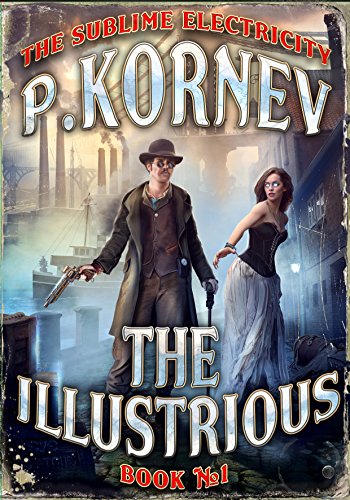
Next new chapter of the Illustrious (The Sublime Electricity Book #1) by Pavel Kornev

3


I found Robert White in Archimedes' Screw; based on his untied neckerchief, he clearly hadn't limited himself to just the one little decanter of port. That said, the inspector's drinking had done nothing to improve his mood.
Some people are like that – they know perfectly well that they have no business drinking, but they still drink, and when they do it doesn't make them feel relieved, just all the gloomier. Robert was definitely one of those types, so before my boss had time to open his mouth and have me thrown out by the scruff of my neck, I decisively took a seat opposite him and, without delay, announced:
"A bank robbery is being planned."
"I told you to bugger off," the inspector mumbled, letting my words pass by unheard, as expected.
"I did what you ordered," I reminded him, removing my dark glasses and, exerting a certain amount of effort to look my boss in the eyes. "Inspector, bank robberies are serious business."
"And what of it?" Robert White frowned skeptically. My confidence hooked him in, though. His fire-filled eyes went dull, taking on a colorless‑gray shade. "Tell me about it!" He gasped with a wave of his hand.
"I think there's trouble brewing at the Witstein Banking House."
"You think so? What gave you that revelation?"
I gave a two-word description of what I'd seen in the Judean Quarter and, when the inspector fell into deep contemplation, I turned and called a server over. It was lunch time, and my boss was now being waited on by a couple of fast-moving girls.
"Saturday," Robert White muttered. "An Orthodox Judean cannot work on Saturday, right? So then he must have not been working. Or does opening and closing a gate count as work? Perhaps they're just doing some repairs?"
"So you're saying the Judean brought in outside workers?" I snorted, filling my glass from the pitcher of lemonade placed on the table. "He'd never hear the end of it! No, I think this Judean is not part of Judean society."
"You're thinking again," White screwed up his face.
"The tattoo," I reminded him. "There was a snake on his right fist. Or a long fish, I couldn't quite tell."
"And what of it?"
"Orthodox Judeans are forbidden from getting tattoos. 'You shall not make gashes in your flesh for the dead, or incise any marks on yourselves.'"
The inspector stared at me with unhidden surprise.
"You know the Torah?"
"No, I just know a lot about tattoos."
"Even if that is so, what makes you so sure that the bank is their target?"
"What other options are there? On one side, there's a grocer's stall, and on the other there's a shoemaker's. It’s got to be the bank."
Robert White finished his port, and barked with his whole throat, drowning out the din that had been ruling over the pub:
"Jimmy!"
The red-head hurriedly stood from his corner table and walked up to us.
"Yes, inspector?" He uttered ponderously, readjusting his uniform. The constable was a bit sotted, but he could still stand up straight and didn't wobble.
"Take a seat!" Robert White ordered him, and asked: "Have you heard any rumors recently about a bank robbery?"
"Nothing, total silence," the constable shook his head after a moment in thought.
"Can you tell me anything about a tall, hunchbacked Judean with a tattoo either of an eel or a snake on his right fist?"
This time, Jimmy answered without hesitation:
"Uri Katz, alias: the Loach. He was sentenced to five years breaking rocks for robbing a store. He might already be out."
"Is that so?" The inspector said in surprise, then ordered: "Find out about him, Jimmy. And that's enough drinking. It looks like we have plans for tonight..."
I took advantage of the pause and started taking sips of my tomato soup. It was salty and hot.

We made for the crime scene with the city already enshrouded in twilight. We walked quietly and unnoticed, like spies from an enemy nation. Our field team was rolling down Newtonstraat, which was illuminated by streetlights. All you had to do was turn off it, though, and the murk grew impenetrable again. The darkness was somehow dispersed by nothing but the meager light of the gas lamps, just having finished being lit by the lamplighters, who ambled with their ladders under-arm from post to post before themselves disappearing. In the dark alleyways of the older neighborhoods, Nix reigned unchallenged, despite the fact that every restaurant was adorned with a flickering lamp, and dull beams of light shot out from the odd slit in cracked blinds.
Jimmy was driving the carriage; he had lit the kerosene lamp, but it wasn't lighting our path so much as it was advertising our coming in the darkness. Without it, we could just run into someone or run over a drunk laying in the street. We also, naturally, were carrying electric torches, but using them would have been equivalent to loudly announcing that a police division was rolling down the street.
And there was no reason to do that. Now, our carriage was visually indistinguishable from a private car. Jimmy had even changed his uniform out for a pair of scuffed-up trousers and a checkered jacket, while the others were hiding inside the vehicle from the immodest gazes of passers-by.
Robert White was sitting on a bench, straight as a bayonet. Only his fingers running incessantly over the top of his electric torch betrayed his discomfort. Ramon set his still unloaded lupara butt-first on the ground, leaned on it and started dozing off. Billy, though, was holding onto the semi-automatic carbines left near the wall, one for him and another for his partner, chewing measuredly on a wad of tobacco, which occasionally gave his already high-cheekbone-d face, with its wide slit of a frog-like mouth, a totally grotesque appearance.
I took a tin from my pocket and threw a sugar-drop into my mouth; it was mint flavor.
"You'll ruin your teeth," Billy smirked, uncommonly calm, like a neurotic after taking opiated patent medicine.
"Look at your own," I retorted, pulling a face.
There was no tooth powder in the world that could get rid of the brownish shade left by tobacco, but aficionados of the simple pleasure were left with no other choice since the manufacturer of patented rubber chewing gum had ceased operation due to lack of raw materials. And there was no reason to expect the rubber supply problem to improve in the next few weeks: the plantations in Ceylon and Zuid‑India couldn't satisfy all the demand, and there was no discussion at all of renewing trade with the Aztecs. What was more, if there was another flare-up in the Sea of Judea, merchant vessels would have to be sent all the way around Africa, because the military fleets of Great Egypt and Persia were capable of covering both the Red Sea and the Persian Gulf. Even air-superiority wouldn't be able to provide adequate support to the merchant fleet, in that our dirigibles would need to stay within range of our fortresses on the north of the Island of Arabia.
Billy just chuckled at my remark, opened the curtain and spit onto the street. Ramon took a look over his shoulder, shuddered, chasing off the sleepiness, and snapped open the barrels of his lupara. After that, he removed a solid round from his bandoleer with a lead bullet in an aluminum jacket and slipped it into one of the chambers in a well-practiced motion.
There was no need for such a powerful weapon when arresting every-day burglars, but you never knew who you'd end up coming across on the dark little streets of our restless city. Regardless, fifty grams of white-hot death could bring down even a demon; not for long, but it was something.
The main disadvantages of this four-barreled monster, produced at the Heim Weapons Manufactory, were its strong recoil and considerable weight. In our division, the only one who could handle one comfortably was Ramon.
Just then, a distinctive knock came on the wall, and the flickering of the kerosene lamps was immediately extinguished; Ramon loaded his last round and hurried to click the barrels shut.
"Are we close by?" He clarified.
"We are," the inspector confirmed and, after throwing the tails of his raincoat back, checked to make sure his six-chambered Hydra would come easily out of its holster.
The Cerberus's older brother looked like a many-barreled revolver and was renowned for three reasons: its extreme resistance to malefic spells and the otherworldly attacks of infernal creatures – after all, electricity is stronger than magic! – and its unwieldiness and overly time-consuming reloading procedure. For those reasons, the Hydra did not enjoy particular popularity among policemen. And I generally shared the opinion that it would have been better if the engineers of the Tesla Weapons Factories had stopped at the three-shot Cerberus.
Our carriage began slowing its pace, and then the inspector commanded Billy:
"You, guard the exit. Stay on Mihelson Street."
The constable flung open the doors, handed the second carbine to Jimmy and jumped out onto the paving stones, fading away instantly into the darkness of the night. The red-head took out his rifle, placed it on his knees, put out the kerosene lamp and pulled back on the reins, slowing the horses' pace even further.
I placed my dark glasses into my breast pocket and unbuttoned the clasp on my holster, pulled out my Roth‑Steyr and placed a round in the barrel. But when the carriage turned at the intersection, leaving the barber shop behind, I was first to jump from the running boards and dart off to the gates. In one moment, I slipped between them, flicked the latch and cracked the gate open, letting Inspector White and Ramon Miro into the alley.
Jimmy turned the carriage toward the next building over and stayed sitting in the driver's seat, carbine in hand; keeping watch suited him just fine.
"Over here!" I called the inspector after me, and he immediately hissed back:
"No noise!"
My boss did not turn his electric torch on, and we had to make our way to the barber shop's back alley in the pitch black. Devil take this new moon...
Fortunately, the dark wasn't quite as impenetrable in the back yard, so we were able to find the back door just by crawling over the junk and construction debris that was cast all around.
"Keep quiet!" Robert White warned again when I put my pistol away in its holster and slipped the crowbar I'd brought with between the door and its jamb.
I cautiously pushed, and the door gave a barely audible creak, then opened. Ramon, his lupara at the ready, was first to step over the threshold. The inspector slipped in after him and hurriedly flicked the switch of his torch.
A bright beam ran across the back room of the barber shop – there was no one there.
"Leo, check the room and wait here," Robert White ordered. "Ramon, let's go to the second floor. And keep qu‑i‑et!"
I set my crowbar down on the buffet, held my pistol in two hands and walked down the corridor, trying my best not to upset any of the creaky floorboards. I looked beyond the curtain, and saw the silhouettes of two empty armchairs – it was clear! I turned into the back room to wait for the return of my coworkers from the second floor.
"Clear," I sounded off when the inspector started coming down from the residential area above.
"Nobody up there either," Robert White grumbled. "I hope you haven't led us on a wild goose chase..."
"They must be in the basement!" I retorted.
"Let's search the stairs," the inspector decided, shining his light out on the doors that went back into the entryway.
Behind one was the cleaning room, and the second led us into a room with piles of bags, stuffed full and covered in dust. They almost occupied the entire space. The only part free was a narrow passage next to the wall.
I took out my knife. With a quiet flick, I extended its folding blade and carefully cut into the plain fabric; dirt poured out.
"Bingo!" I then sighed, not hiding my relief.
"They’re in the basement!" The inspector came to life. "We'll catch them red handed!"
We carefully made our way along the passage to a dark hole in the floor and surrounded it, not having any idea what to do from there. After some brief thought, the inspector nudged Ramon in the shoulder and pointed at the floor.
"Come on, then!"
The constable got down on his knees, placed his lupara on the dusty boards and tried to see what was underneath.
"There's a light on," he informed us almost instantly.
"Keep quiet! You’ll spook them!" Robert White gasped with zeal, finally having forgotten all his doubts about me.
As a matter of fact, leaving the light on in the basement of the barber shop was not at all the behavior you'd expect from a pious Judean.
"Let's go! Let's go!" the inspector commanded. "Faster!"
Ramon rolled down first. I darted off after him without delay, despite the fact that I was usually not too fond of basements. They scared me so badly that I got an uncomfortable chill; they made me feel ants on my back and got my knees shaking involuntarily.
But what could I do?
Push on!
Practically stepping on the constable's heels, I ran into a small closet, practically half-way filled up by a huge pile of dirt. Here as well, there were fragments of wall lying everywhere. At the table, in a circle of light coming from a "bat" that hung down from the ceiling, sat the lanky Judean from earlier, his bald head no longer hidden under a black hat.
Having heard the sound of our footsteps, he set a mug down on the table and turned, but when he saw the lupara barrels pointed at him, he froze, not wanting to do anything stupid.
"Hands!" Ramon ordered under his breath, and the Judean obeyed.
I walked around the pile of hauled-in dirt, stepped over the upturned cart and took a seat next to the opening in the torn-down wall. I carefully looked at the wooden-beam-reinforced entrance hole. There was only one thing back there: darkness.
"Clear," I reported to Ramon.
"Inspector!" He called to our boss, not turning his weapon nor his persistent gaze away from our captive.
Robert White went down into the basement in no particular hurry, walked up to the table and picked up the strange-looking pistol that was lying on it. With its bent grip and open cock-hammer, the back part of this strange weapon was reminiscent of a revolver, while the front part of the arrangement was a copy of the Mauser K63, with the one difference being that, here, the magazine was removable.
"Bergman, number five!" The inspector announced, adding tellingly: "A total greenhorn."
He turned the weapon over in his hands and pointed the barrel at our captive, feigning that it was on accident.
"Who else is in on this?" Robert White asked, playing with his thumb on the cock hammer.
The lanky Judean swallowed loudly and hurried to answer:
"No one."
"Two? Three?" Robert clarified, his eyes becoming whiter than chalk and more transparent than the freshest spring water.
"No one!" our captive once again lied.
The inspector, in a rough motion, tore off one of the man’s fake payos, then the other and, with unhidden grief in his voice, said:
"Why are you lying to me, Uri?"
The Judean shook, but found himself not strong enough to rip his gaze from the eyes of my illustrious commander. He tried to turn his head, but was not able and, somehow all at once, collapsed.
"Two," the criminal admitted.
"Are they armed?"
"Yes."
"Ramon, go look for them," White then ordered the constable.
"On your knees!" The inspector immediately ordered. "Hands together on the back of your head!"
Inspector White nodded in satisfaction, set the pistol on the table and walked up to me.
"What's going on with you, Leo?"
I looked into the darkness of the passageway and gave an involuntary shiver:
"Just a touch of claustrophobia." I then asked: "Inspector, shall we call Jimmy and Billy?"
"We'll manage without them," my boss cut me off, turned up the regulator on his electric torch to full power and took his Hydra from its holster. "Let’s go!" he ordered, the bright ray of light sliding over the wooden construction beams and stopping on a dirt wall.
I, with a heavy sigh, crawled into the tunnel, doubled over and, pistol in hand, began moving forward. The inspector tried to light the way, but it did no good, the beam often falling only on the back of my uniform.
Not able to restrain myself, I turned and suggested:
"Let me hold it!"
After that, torch in hand, I got to the point where the tunnel turned to one side and discovered that the robbers had encountered some old stonework there. They hadn't managed to make it through with a direct route, and had to make a turn to the right.
And it was no surprise – New Babylon was almost two thousand years old; there was history no matter where you dug in this city. And though old buildings were being demolished constantly to make room for new ones, the old foundations were typically left below the earth, newer and newer buildings rising up above them.
This was no a city; it was an archeologist's wildest dream. But, given that, trying to dig tunnels was often a ruinous undertaking. Now, it was clear where the whole colossal pile of dirt had come from.
I crept up closer to the turn and licked my dried-out lips.
I was afraid. Very afraid, in fact. In the darkness, the burglars could simply be hiding with pistols at the ready or even...
"Leo!" The inspector pulled me out of my thinking.
His bark shook away my pent-up consternation, replacing it with annoyance and vexation; I felt as if I had been caught doing something unseemly.
I cannot bear basements!
And despite my lame-brained premonition, I stepped around the corner. I walked at a crouch, flashlight held high over my head and pistol drawn, but it just led to another hallway dug out along the stone wall.
"It smells bad, inspector," I whispered.
White reacted as if he didn't hear me.
"Move it!" He hissed at my back.
I ducked down so I wouldn't bump my forehead on a ceiling board, and resumed my movement. I made it to the next turn and took a cautious look around the corner, not noticing anything suspicious. But after I took one more step, my leg immediately caught on an overturned stone from the old wall. I was lucky not to have tripped.
As it turned out, the burglars had been lucky enough to discover a slit in the unfortunate wall, and they had widened it in the hope of cutting a path through the deserted catacombs the easy way. But these fairly heavy stones, unlike soil, were quite difficult to haul out, so they had simply tossed them away from the wall in a semi-circle.
Then I hesitated. The history of the Judean Quarter wasn't very well understood. These housebreakers may have simply hit upon a plague-stricken burial ground, or something worse.
"Faster!" The inspector hurried me along once again.
He was seriously intending to cover up the morning's fiasco by catching a dangerous gang, so there was nothing left for me to do than obey the order and crawl into the opening in the partially removed wall. Beyond it, the corridor darkened. And it was, in fact no longer a tunnel, but a proper corridor.
"Be careful," I warned the inspector, stepping very carefully on the uneven soil- and stone-covered floor.
In trying to make their work easier, the bandits had thrown the loose soil they removed all around, and now my shoes were becoming deeper and deeper immersed in the crumbly mass with every step.
Gasping out a soundless curse, I set off in search of the wrongdoers, but soon stopped at a fork in the path.
"Right?" I turned to ask my boss’s opinion.
The floor was fairly well-trod. There was clearly just one set of tracks going to the left and it turned around fairly quickly. In the other direction, however, a fully-fledged path had been worn in.
The inspector elbowed up to me, looked at the floor and agreed.
"Right!"
Lighting the path with the electric torch, I walked on. Robert White was wheezing noisily behind me, and all that remained for me was to hope that the barrels of his Hydra were pointed at the floor, and not aimed right at my loins.
An uneven floor, a slight descent – should I tell my boss?
"Faster!" the inspector hurried me along once again.
I got distracted by his nervous whispering and slapped my forehead on a stone ledge under the ceiling.
"Damn!" I whispered, crouching down on my haunches from the unexpected nature of my pain.
My thoroughly peeved boss took the torch and, not waiting for me to follow, stomped off decisively down the hallway.
"Stop!" I gasped to his back, finding the derby hat that had been knocked off my head and hurrying after him. But before I'd managed to catch up, Robert White had already found a room with stone columns holding up a high ceiling.
"Uri?" came an uncomprehending shout. "Uri, you putz, what the devil'd you limp down here for?!"
The inspector's arm shot up, putting the unaware criminal right in the sights of his Hydra and commanded:
"Hands up! Drop your weapon!"
In reply, the distinct clink of a hammer being pulled back rang out. And it came from the opposite corner, the one behind the inspector!
"You first!" the second burglar exclaimed hoarsely, stepping out from behind the stone column with a pistol in his hands.
In an instant, his partner filled with enthusiasm and pulled his pocket Colt.
"Gotcha, piggy!" he grinned.
The inspector turned out not to have been prepared for this turn of events and froze in confusion. I, though, did not hesitate.
I stepped out from the corridor and shouted:
"Police!" And, to enhance the effect, fired a shot up into the ceiling.
In response, a pair of shots clapped out; Robert White sank down into a pile of rubble, his chest shot through. Detective Constable Orso dropped his smoking pistol and fell to the floor like a sack of potatoes. There was a black hole gaping in his forehead. He died instantly. The inspector, though, was scraping his feet on the stones, not having any desire to kick the bucket himself. Blood was bubbling up between his lips. The stubborn man was still trying to gather his strength and reach his pistol.
Before he could, though, I shot him through the head. I simply raised my Roth‑Steyr, aimed it, and pulled the trigger. Just like at the firing range.
"Shit," gasped Inspector White.
"Shit," I agreed, pulling a tin of sugar-drops from my pocket and sending the first candy I happened upon down my throat with a shaky hand.
Robert shined his light at the robber on the pile of rubbish. He had returned to his true appearance after death. Robert then shined his torch on the man’s partner. Death had returned him to his original body as well.
"How the hell?! How'd you do that?" The inspector demanded an answer, mechanically patting his chest and finding it utterly unharmed. "How did you force them to kill each other?"
I shrugged my shoulders, faking ambivalence.
"They were afraid. They were afraid of a police raid, afraid of a cave-in, and afraid of being shot in the back by an untrustworthy partner. I simply took advantage of their fears, and got them to see something that was not there. That is my talent, as you know."
"But I saw it, too!" Robert White bellowed, the volume of his breathing drawing attention to its unevenness. "Curses! I saw you shoot me! You! Me!"
"Fear is inside all of us," I confirmed calmly. "You can't be telling me you never considered the possibility that you could be wounded, or even die, right? I'm sure you're afraid of that, just like everyone else. It's one of the hazards of the profession."
"Do you mean to tell me that you are capable of changing reality itself with the power of your thoughts?"
"More like the power of my imagination. I have an extremely active imagination." I looked at the shot-through robber and shook my head. "And no, I do not have the power to change reality. I only gave it a slightly different face, that's all."
I said nothing about how exactly my talent was fed by others' fears. If I had, the conversation may have gone too far; being accused of black magic was serious, even for one of the illustrious.
The inspector just shook his head and placed his pistol in the holster. I followed his example and asked:
"What now?"
"I don't know," Robert White answered, shining his torch all around the underground room. "I don't see a hole leading into the bank."
"Maybe they hadn't dug it out yet?"
"Or maybe it's in a different room," the inspector decided, calling me after him: "Let's go! We can send all this dog meat to the morgue in the morning."
Leaving the stiffs on the bloodied floor, we turned back toward the fork in the path and walked off down the second corridor. Soon, Robert White slowed his pace and raised his torch, aiming its bright beam into the black maw of an empty door-frame. The darkness immediately dashed off into the corners of the small room with a high cupola-ed roof, revealing rows of dusty sculpted stone benches.
"Check them!" the inspector ordered.
After the recent incident, the desire to crawl headfirst into a new assignment had diminished a good amount.
Before stepping inside, I took my Roth‑Steyr from its holster just in case, but I didn’t need it: in the small room there was neither any person, nor any exit.
A dead-end.
A dead-end, sure, but what kind of room was it?
"Strange..." I muttered, returning my pistol to its holster.
"What's up there?" The inspector elbowed his way past me and scanned from side to side with his torch. "It looks like an abandoned chapel," he declared, deeming it, "old news."
"That could very well be," I nodded and agreed. "Would you be so kind as to point your torch over there, though?!" I asked my boss, indicating the place at the end of the room where, according to my suppositions, there had once been an altar.
Robert White swept the beam of his torch along the far wall and turned back around to leave.
"Let's go!" He called, but I couldn't even get a single word out. It felt like I was having an epileptic seizure.
And I might as well have been. Because a fallen one cast its eyes on me.
Right there and then, he looked at me, and his bottomless eyes sucked into themselves all the darkness, rage and injustice of this world; all that and a bit more.
And there’s quite a lot of that around, mind you.
It isn’t clear...

My consciousness returned from a punch straight to the shoulder.
"Detective constable!" The inspector's roar burst into my oblivion. "Eyes open, now!"
I greedily sucked down some air and crawled away to the nearest bench. I sat on the floor next to it and leaned on it back first. I started massaging my temples with my palms in a pitiful attempt to stop my much-suffering head from exploding.
"What's going on with you, Leo?" Robert White got down on his haunches and touched my shoulder with his fingers. "What happened?!"
"A fallen one," I exhaled. "There..."
The inspector turned to the far wall, then stared at me with unhidden annoyance.
"Are you stark raving mad, Leo?" He wondered acridly. "That's nothing but a statue!"
"Not at all! That is a fallen one, I'm telling you!"
Robert White gave a quizzical snort and shined his torch on the wall again.
"That is a statue," he declared after a short break, not quite as certain this time. "A strange statue..."
The sculpture did, in fact, reflect how wrong he was. It was sculpted down to the smallest detail, as if every fiber, hair and wrinkle were carved into its marble skin, but only above the belt. Its legs were hidden in the wall. Beyond that, it didn’t look like it was being held in the wall, it simply made a smooth transition into the unified whole of the wall, as if the fallen one had been bursting out toward freedom, and only something tiny had stopped it from escaping its stony prison.
"Do you not feel that, inspector?" I asked, overcoming my weakness and leaning more upright against the bench. I got up from the floor and repeated my question: "Do you not feel that?"
I was trying not to look at the fallen one another time, if I didn't have to. To be perfectly honest, I tried not looking at all. The fallen one, even in this stony form, weighed on me with a sensation of limitless power and a sharp non-belonging to this world. Every feature of its stony face reflected its perfection but, all together, it formed something so ideal that nothing human remained in its frozen mask whatsoever.
Ideal without the slightest flaw.
A dead ideal.
And that ideal weighed down on me.
"Do I not feel what?" Robert White seethed with anger. "You are stark raving mad, Leo!"
"You're illustrious, though! You cannot tell me you don't feel that!"
The inspector burned a hole in me with his hateful gaze, approached the statue and placed his palm decisively on its stone chest. I unintentionally followed him with my gaze, not noticing how my attention had once again been seized by the marble sculpture; it held me completely. The fallen one increased in dimension, filling the whole space. Its stone wings, spread in different directions, and began glowing from the inside with an amber light, which only made it seem darker in the chapel. And the eyes... Its black eyes were no longer dead, they had been filled with a boundless darkness. Darkness and something else, like scornful incomprehension.
Its alien willpower was again pressing me down into the floor like an unseen hand. It reached my head. With a gust of transparent wind, it upended my memories. I tried to reach the exit, but my hands and feet were numb. I really don't know how it all would have ended if the torch hadn't burnt out. Its wire started smoking, and the room began filling with the smell of burning rubber. The caustic stench helped me master the ghastly apparition, throw off my consternation and flee back into the corridor.
Robert White jumped out behind me, pulled back on my legs, and pressed me to the wall with his elbow.
"What the devil was that?!" growled the inspector, spittle flying from his lips.
"That was a fallen one!" I shouted, tearing my boss's arm from me and carefully, following the wall, continuing away from the ghastly chapel. "I don't know how it was turned into stone, but that is a genuine fallen one! We must tell the authorities. We must plug up this tunnel system before he makes it out to freedom!"
"Come off it!" The inspector gave me a jerk. "Even if that is so, how many decades has he been collecting dust down here? How many centuries? He can't escape, Leo! There's no way."
"I could have returned him to life. And if I could have, that means others could as well!"
Robert White even took a step back.
"You've gone mad!" he announced.
"No!" I assured my boss. "That's all my talent, my cursed imagination! It's enough for me to simply imagine him free! Do you understand? If I simply imagine it, he will burst out of his stone prison! Freeing him would be easy. Too easy. We need to plug the chapel up!"
"What are you on about?!" The inspector walked up to me again and shook me sharply by the shoulders. "You've always spoken of fear! Of the fact that others' fears could feed your talent and give it power!"
"The fallen are that very power! A pure, totally unclouded power!
Infernal creatures are simply energy incarnated into the material world. They generously shared their power with the mortals who swore allegiance to them and began to act as generators for even more power, but they didn't create electricity, they created death, sorrow and destruction.
In the end, the malefics were forced to settle accounts with these hell-spawn at the cost of their own souls and many others' lives. My talent, though, allows me to use the power of these otherworldly creatures directly, because fear and deadly horror walk hand-in-hand with them.
But that fallen one was too strong. It weighed down on me with an unearthly grandeur and rage. It forced all images from my head except its own. I was merely a tool to it, and I was capable of breaking the curse and turning its stone firmament into living flesh; to it, I was a mindless 'master key' and nothing more.
Giving impetus to such an unnatural metamorphosis would be certain to fry my consciousness, but why should the fallen mind that? Tools do tend to break, right?"
All my admonishments did not seem to be convincing to Robert White.
"That's enough!" he ordered.
"No, it’s not enough, inspector!" Having forgotten my place, I walked up to the man. "Do the fallen not hold power over forces that go beyond the limits of human understanding? Curses! Just remember what they did to the Arabian Peninsula! They simply ripped a fair chunk of it off and chucked it half a world away into the Atlantic Ocean! They needed only a single day to create Atlantis, just one day!"
"That's all hogwash!" Robert White cut me off, pushing me back against the wall. "I'm the final say in all matters, got it? Not a word to anyone. Not Jimmy, not Billy and not Ramon. Not a living soul, do you understand, Leo? That is an order!"
"Yes sir," I grudgingly agreed to keep my silence.
"Then let's go."
Robert White headed for the exit, and I shuffled off in his wake, asking:
"Was its heart beating? Inspector, did you feel its heart beating? You did, didn't you?"
The inspector stopped with a fateful sigh and looked at the palm he had placed on its stone heart.
"It was beating!" He suddenly confirmed. "It was beating, Leo. But be nice and hold your tongue. Alright?"
"Alright," I relented, not wanting to get into a senseless squabble with my boss. "Just deal with this."
"Feel free to check, I'll deal with it," Robert White promised.
And I believed him. He'd handle it. The inspector knew where his interests lie, he wasn’t that kind of person.

When we got out of the tunnel into the barber shop's basement, Ramon Miro was standing with his weapon at the ready against the opposite wall, simultaneously watching over the hole and our captive.
"What’s happened to you lot?!" He asked in agitation, lowering his lupara. "I heard gun shots!"
"Nothing’s happened to us," the inspector answered calmly and took the pistol lying on the table. "Nothing at all," he repeated, shooting the kneeling Judean in the back of the head.
Uri fell awkwardly on his side. A very thin trickle of blood ran down his cheek onto the dirty floor. Then Robert threw the pistol back and let out another gasp:
"Nothing!"
"What devilry was that?!" Ramon marveled. "Inspector, what's going on?!"
White grabbed the constable under the arm and dragged him to the stairs.
"Ramon!" He spoke didactically. "Do you have hearing problems? Did you not hear me? Nothing happened and nothing is happening! Nothing! You weren't here at all, Ramon. Leave it to me."
"How do you mean...?" What the constable tried to do was turn to the executed Judean, but the inspector held him in place and pushed him back toward the exit.
"Leave this all up to me," White declared. "Get out! And send Jimmy!"
So we went. We came up from the basement in silence, striding wordlessly through the empty rooms. Only when we’d reached the dead darkness of the back courtyard did the constable decide to express the doubts that had beset him.
"Has the inspector decided to clear out the bank himself?" he asked directly.
"No," I refuted his proposition. My colleague was clearly expecting something more concrete, though, so I shared a partial truth: "Ramon, you should know that complications of a certain nature have arisen, and our boss has taken them... let's say, a bit too close to heart."
"Is that right?" my hulking partner stared at me with unhidden suspicion, beginning to suspect that he'd been tricked.
"That's exactly right" I affirmed. "The robbers didn't even make it to the vault. Don't worry."
"Ah, then what is it to me? The inspector knows best," Ramon shrugged his shoulders and headed off to find Jimmy.
I nodded and went after him.
To you, it's nothing, and to me it's nothing.
We don't have so many responsibilities. Let the higher-ups deal with the headache.

How could I have been so naïve?

Pre-order on Amazon

Sunday, August 7, 2016

2nd chapter - The Illustrious (The Sublime Electricity Book #1) by Pavel Kornev

2

I entered the Newton‑Markt, the whole-block police headquarters building, through the back service entrance. I let an armored car pass by as it left the garage to the measured claps of a gunpowder engine before rolling unhurriedly down an alley. I took a look around and ran up the stairs. I flung the door open confidently, nodding to the sleepy sentry on my way and walking through the empty halls into the armory.
There, I handed a sergeant my stun baton and took its electric jar from my pocket, still wrapped in this morning’s edition of the Atlantic Telegraph. I threw the crumpled newspaper into the trash can. The item collector handed my things to the arsenal warden.
"Stun baton, one," and made a corresponding note in the registry. "Edison electric jar, one..." And immediately shuddered: "And where is the second one? The Des Prez?"
"Put it down under irrecoverable losses."
"And why on earth would I do that?"
"Any questions should be directed to Inspector White."
"Alright, we'll figure it out," the sergeant frowned, dipping his iron feather back into the inkwell.
I walked away to the table in the far corner and set two loaded cartridge clips on it, then took my Roth‑Steyr from its holster, and removed the bolt all the way from the head, which was affixed with a titanium barrel extension. With its side stock open, I pressed the round eject button, collected the ammunition that flew out onto the table in an empty clip and turned to the sergeant.
"Semi-automatic Roth‑Steyr pistol, model eighteen-seventy-four, one," the man grumbled. "Eight millimeter bullets, thirty. Is that all?"
"That's all," I confirmed and walked to the changing room. There wasn't a single living soul to be found there.
And that was logical. It was the dead middle of a shift right now. Our boys would still be out pounding pavement 'til nightfall.
I opened my locker with a certain amount of relief and kicked off my raincoat, uniform and boots. I changed into a light-colored linen suit and a pair of lightweight half-boots, tied my neckerchief, and smoothed my hair before a mirror. Lastly, I took a cantankerous look at my reflection and donned my dark glasses.
Damn it! Damn all this inner turmoil! I need to live in the present.
After transferring my kerosene lighter and titanium-bladed jack-knife from my uniform to my new clothes, I hesitated briefly, but still clipped my Cerberus holster to my belt. It was a thin and compact pistol. I slipped a backup clip with three ten-millimeter bullets into the pocket of my jacket.
This gun was an invention of the weapons genius Tesla. He had decided that the barrels should be a detachable cluster of cylinders, like a pepper-box. For that reason, the Cerberus wasn't, to put it lightly, known for its accuracy. That said, in close-range firefights, it was simply indispensable. Its firing mechanism used an electric igniter on a gunpowder round, which launched an aluminum-plated bullet. All those bells and whistles were to make sure this weapon would work against both malefics and hell-spawn, alike. Common weapons, due to peculiarities in their design, were of little use against them: over many centuries, evil spirits had managed to develop an invulnerability to iron, copper and even lead, while experienced conjurers had learned to put out the spark of a punched primer and hamper the complex strike-launch mechanisms in semi-automatic weapons with a single wave of the finger. For revolvers, shooting blanks at such monsters was also anything but a rarity.
The Cerberus, on the other hand, was a different story! Its electric jar and total lack of moving components left no chance for either malefics and infernal beasts to prevent a shot getting off. What was more, in comparison with my one-kilo Roth‑Steyr, this pistol weighed practically nothing.
I took a light gray derby hat from the upper shelf of my locker, locked the door and left the changing room. On my way out, I ran into an unfamiliar gray-eared sergeant, who was accompanied by two uniformed constables.
"Detective Constable Orso," the sergeant declared as he walked, "follow me! The inspector general would like to see you."
My heart practically jumped out of my chest, and I took a heavy sigh in a none-too-successful attempt to calm myself down.
The experienced public servant noticed my utter bewilderment and clarified:
"Will you be coming with us, detective constable?"
"Naturally!" I squeezed out a sour smile with a bit of effort and repeated, this time more confidently: "Naturally!"
The sergeant nodded and headed for the stairs. The constables, though, let me go in front of them initially, but moved around behind shortly thereafter, forcing me with their artless maneuver to cast all thoughts of fleeing from my mind, panicked and disgraced.
Calm yourself!
Weren't you expecting this? Well, weren't you?
Yes, devil take me, I was! I was expecting this, but not so soon. The old man was most likely diabolically angry, if he had sent someone to keep watch for my return.

The Illustrious Friedrich von Nalz was old, but not decrepit. Seven decades had done nothing to weaken this veteran of the force. In fact, they had only steeled him; the inspector general looked like a big, strong cluster of pine roots. And his eyes... his deep-set eyes shone back in the partial darkness like two angry flames, like flickering candles in the slits in a wrinkled jack-o-lantern.
His surprising longevity was simply astonishing. Most of those who had actually touched the blood of the fallen had long since bid this world farewell. After all, the Night of the Titanium Blades was fifty-three years ago – in December of the year eighteen hundred twenty-four after the Divine Retribution, or in usual parlance, of the New Era.
Despite his advanced years, the Illustrious von Nalz was not only a leader of the metropolitan police, but also a member of dozens of clubs and charitable societies, and a man who started every morning with a review of the morning's papers, demonstrating an enviable working capacity. And now, there was a towering stack of newspapers on his table but, as could have been expected, he had stopped reading precisely upon reaching the Atlantic Telegraph.
Curses! Ugh, who asked Albert to stick his long tongue out!
When I arrived, Friedrich von Nalz tore himself from the paper and stretched his lips out in something resembling a smile.
"Viscount Cruce! I don't believe I've ever had the honor of making your acquaintance..."
In reply, I could only lower my head.
The old man readjusted the cuff of his black uniform. His wrinkled wrist, which looked like a bone picked clean by vultures, was protruding just barely. He then asked me:
"Are you acquainted with my daughter, Viscount?"
"I was introduced to her at the autumn ball," I answered, struck with horror.
In the office, it became hot and stuffy all at once. And it had nothing at all to do with the fireplace. It hadn't been lit today. Hot air was emanating in waves from the old man sitting across the table from me. It was his illustrious talent revealing itself. I had already seen its terrible effects before, and I in no way wanted to become a victim. A few years ago, I caught a glimpse of the dried-out mummy of an anarchist after he made an attempt on the inspector general’s life. The sight of a man who had been baked alive left me sick for the rest of the day.
"You were introduced at the ball, and that was all?" clarified the Illustrious von Nalz, making no external signs of the rage seething inside himself.
"And that was all," I confirmed, diligently making sure not to make eye contact.
Just looking at him was very, very scary.
But then, the old man suddenly broke out laughing, crumpled the paper and threw it into the paper bin.
"You know, Viscount? I believe you. Implicitly," the inspector general surprised me with his unexpected announcement. "I simply know my daughter too well. Elizabeth‑Maria would never go for someone like you..." He fastidiously cringed and threw himself back into his high-backed armchair. "That isn't important! What is important is that your loose-lipped rhyme-peddler's talk will start rumors. And I cannot have that..."
"Inspector general!" I tried making an excuse. "They were talking about a different Elizabeth‑Maria! Not your daughter! It’s just a coincidence!"
But Friedrich von Nalz could only shake his head, sending another wave of transparent heat wafting toward me.
"Viscount! I can imagine you in the role of a secret admirer, but never that of a lover," the old man cut-in with cold ruthlessness. "Don't lower yourself to such base lies."
"My wife is called Elizabeth‑Maria Nickley. Her family is from Ireland. She gets her name from her grandmother on her mother’s side. I am preparing to present her at tomorrow's ball."
The inspector general started to think, as if solving a complicated charade, then nodded.
"That would be nice," he said slowly, with detachment, but immediately turning his eyes on me in rage. "Just know, Viscount, that if you drag some cheap actress down there and bring shame on my daughter, I will destroy you myself, my-self! I will make your blood boil in your veins and cook you alive!"
"I assure you, inspector general, it will not come to that!"
"If the poem was in fact intended for my daughter, its best to admit it directly, here and now," continued the Illustrious von Nalz, already absolutely calm. "In that case, I would have to challenge you to a duel, though at least you would die with dignity. And not in such torment..."
"There’s no reason for..."
"You could, it stands to reason, hide, but I do not advise that at all. I really do not."
"I wasn't even thinking it!"
"Get out of my face," then rasped the highly placed officer, ending my hearing.
With a furious speed, I jumped out into the reception. The air there seemed simply icy by comparison. A trickle of cold sweat started running down my back. Somehow, I slowed my panicked breathing and went down to the first floor, but before I'd managed to close the entrance behind me, I was called on again.
"Detective constable!"
After shuddering in surprise, I turned to see a constable getting up from his desk with some kind of envelope in his hands."
"Correspondence for you!" he said.
I took the unexpected letter and nodded:
"Thank you," and went out into the colonnade-enclosed portico courtyard, where ancillary workers were trying without particular success to wash away the soot that had accumulated last winter on the white marble of our Themis statues.
With a heavy sigh, I lowered myself onto one of the benches placed around the fountain and took a look inside the thick paper envelope addressed to me only by name, no address, stamps or mention of who'd sent it. After giving an uncomprehending snort, I took my jack-knife from my pocket, cut open the seal and shook out a laconic invitation to visit the Witstein Banking House to discuss the issue of my gaining access rights to my inheritance.
I reread the letter two times and furrowed my brow in consternation. My attorney hadn't managed to beat any paper from my fund in the past month, so why then would my uncle move the situation forward so easily? And what did the Witstein Banking House have to do with my inheritance? The Kósice family had never had many dealings with the Judean community.
After looking at the massive chronometer, new-fashioned, meaning it was worn on the arm, I decided I still had time to visit the Banking House before it closed for lunch, and if I didn't make it, no matter, I could wait. I didn't have anything planned for today that couldn't be rescheduled anyway.
I jammed the envelope in my jacket pocket, and left of police head‑quarters' courtyard. Then, in no particular hurry, I stepped off down Newtonstraat toward Ohm Square.
For the beginning of April, today was shaping up to be an unusually humid day, and the sun hanging over the roofs of the houses was heating up the city everywhere I went, like a steak thrown into a smoking pan. Even the black clouds billowing on the horizon were no guarantee that the freshness of evening would soon be arriving; most likely, they would simply disperse over the ocean.
Ducking away from the muggy air, I turned down a sycamore alley and began walking further into the shade of the trees. Five minutes later, I came out onto the rear of Ohm Square and happened upon a mercilessly smoking steam tram. I was barely able to grab onto the handrail before its iron wheels started clanking around the bend where the rails had a juncture, causing the tram to rock palpably.
On the other side of the windows, buildings drifted by at a turtle's pace. Wisps of smoke came into the open door from time to time, stinging my eyes unbearably. We couldn't even dream of the speeds of the Underground, though. To get from the nearest underground railroad station to the Judean Quarter, you'd have to spend no less than a quarter hour slogging through the confusing little side-streets of the old city.
And what was the point?
Bit by bit, my view of the city was beginning to change as we left the newly constructed high-rises behind us. Dilapidated commercial buildings and office buildings with slanted roofs started closing in on one another while the tram traveled down the narrowing road. The tiny, damp alleys between buildings flickered by, and the steam tram rolled on.
Cabbies looked on with unhidden disapproval at the passengers now filling the tram-car to the brim. Their horses were sneezing and shaking their heads, caught in the smoke trail the tram was leaving behind. A few times, we were passed by open self-propelled carriages, their chauffeurs wearing leather jackets, leggings and goggles that covered half the face. The carriages shot off into the distance, but the loud chirruping of their gun-powder engines continued to carry down the street for some time.
When we reached Mendeleev Boulevard, I jumped out of the steam tram and swerved off the sidewalk into a passage between two buildings, both scuffed and uncared-for with narrow windows on the second story and above. I got a bit lost in the back alleys and soon came out onto a big street. The nearest building on it was sporting a fresh sign: Mihelson Street.
The first floors of the solid stone building were occupied by many shops and stalls, but it all looked like one solid mass now, with the storefronts shuttered behind security doors in preparation for nightfall. Based on my impression, it seemed as if one of the liveliest trading streets of the Judean neighborhood had suddenly died out. I walked a whole block, and not a single living soul crossed my path.
Only on the corner next to a barber shop, did I see someone: a long figure standing motionless in a long-skirted black frock and hat to match.
Sliding my gaze over the dispassionate face framed with peyos and a beard, I walked alone up the stairway of the detached three-story building with a solid signboard reading Witstein Banking House and pulled the door handle toward me.
It didn't yield. I jostled it – still stuck.
Then I gave a few hits of the knocker on the iron sheet door, waited a few minutes and again pulled on the handle, but suddenly froze, struck by an unexpected thought.
"Saturday!" I slapped my palm on my forehead. "Today is Saturday!"
Shabbos!
In our enlightened society, any manifestation of religious ideas was viewed in a dim light, and all forms of mysticism were mercilessly rooted out and eliminated. Orthodox Judeans, though, had been steadfast in bearing the incessant accusations of the Mechanists. As a matter of course, these threats were rarely acted on: the buoyant financials of the group allowed them to grease the right wheels of the state apparatus if need be, so any talk about massacring them remained just that – talk.
Though science had completely extricated religion from mainstream society, our top power brokers had a healthy pragmatism and held holy the principle of "render unto Caesar that which is Caesar's." Money was the lifeblood of the Empire, and everything else came second.
I took a tin of sugar drops from my pocket and threw the first one I came upon into my mouth.
So then, today is Saturday; the Banking House is closed. Tomorrow as well. Sunday is an official day off.
What a shame.
At that very moment, a covered wagon rolled across the intersection with a screech. The driver, his cap thrown down over his eyes, was hurrying the trucks into the barber shop’s back courtyard, and the lanky Judean was rushing to open the gates. As soon as the cart was out of view, the gate closed just as quickly.
Very interesting.
I took a quizzical look around, then pressed down a button on my arm chronometer, setting a countdown, and tossed another sugar drop into my mouth.
I can wait...

The cart rolled back out onto the street twenty minutes later, but this time the haulers were obviously straining themselves, and the cart was leaving a dust cloud in its wake. The lanky Judean stood in front of the gate and tried to unlock the entrance to the barber shop, but the key just didn't want to turn in the lock; he even had to remove his thick canvas gloves and hold them under his armpit.
I popped another sugar drop into my mouth, slipped the tin into my jacket's side pocket and stepped across the road.
"My good man!" hailed the Judean, standing up in the middle of the carriageway.
The lanky one turned, shot me a worried glance and croaked:
"We’re closed!"
"I'm not here for that! Can you tell me where the nearest Underground station is?"
"Over there," the lanky barber waved me down the street with his left arm; his right arm, bearing an old bluing tattoo he jammed into his frock pocket, acting casual.
I bowed my head slightly and pressed the very tips of my fingers to my derby hat.
"Thank you," I smiled and walked off in the direction he pointed, not asking him to clarify the route.

After all, that wasn’t why I was asking.

Pre-order the book on Amazon